
Collecting watercress in Myanmar
Foodborne trematode infections
Foodborne trematodiases are a group of diseases caused by the parasites Clonorchis sinensis, Opisthorchis spp., Fasciola spp. and Paragonimus spp. These parasitic flukes have a complex life cycle involving diverse definitive hosts and one or two intermediate hosts. The first intermediate host is always a freshwater snail. The second intermediate host varies by species: for Clonorchis sinensis and Opisthorchis spp., it is a freshwater fish, while for Paragonimus spp., it is a crustacean. Fasciola spp. do not require a second intermediate host. The definitive host is always a mammal. People become infected when they ingest an infected second intermediate host (raw or undercooked fish or crustaceans), or in the case of fascioliasis, aquatic vegetables to which the infective larval stages of the parasite are attached.
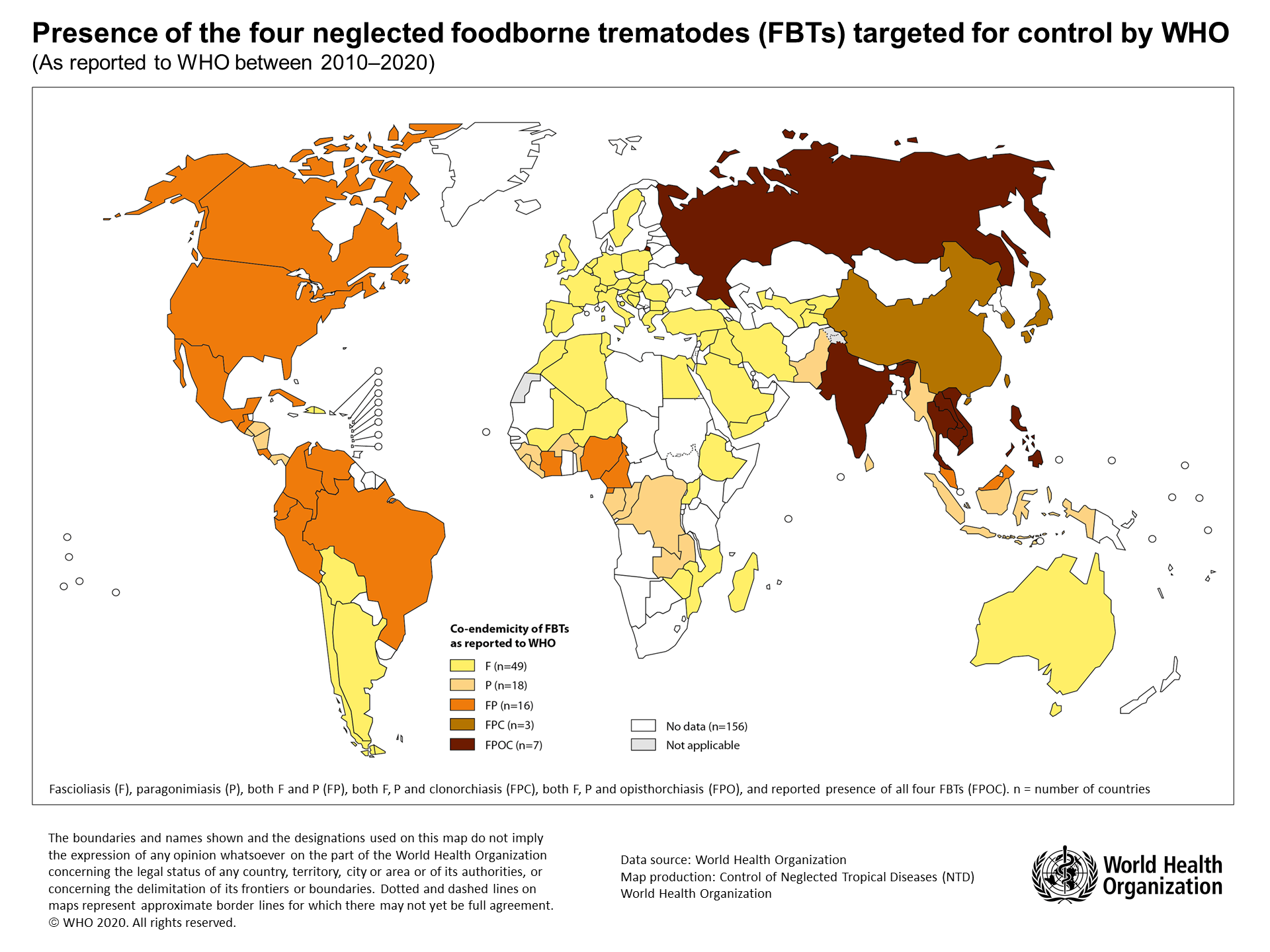
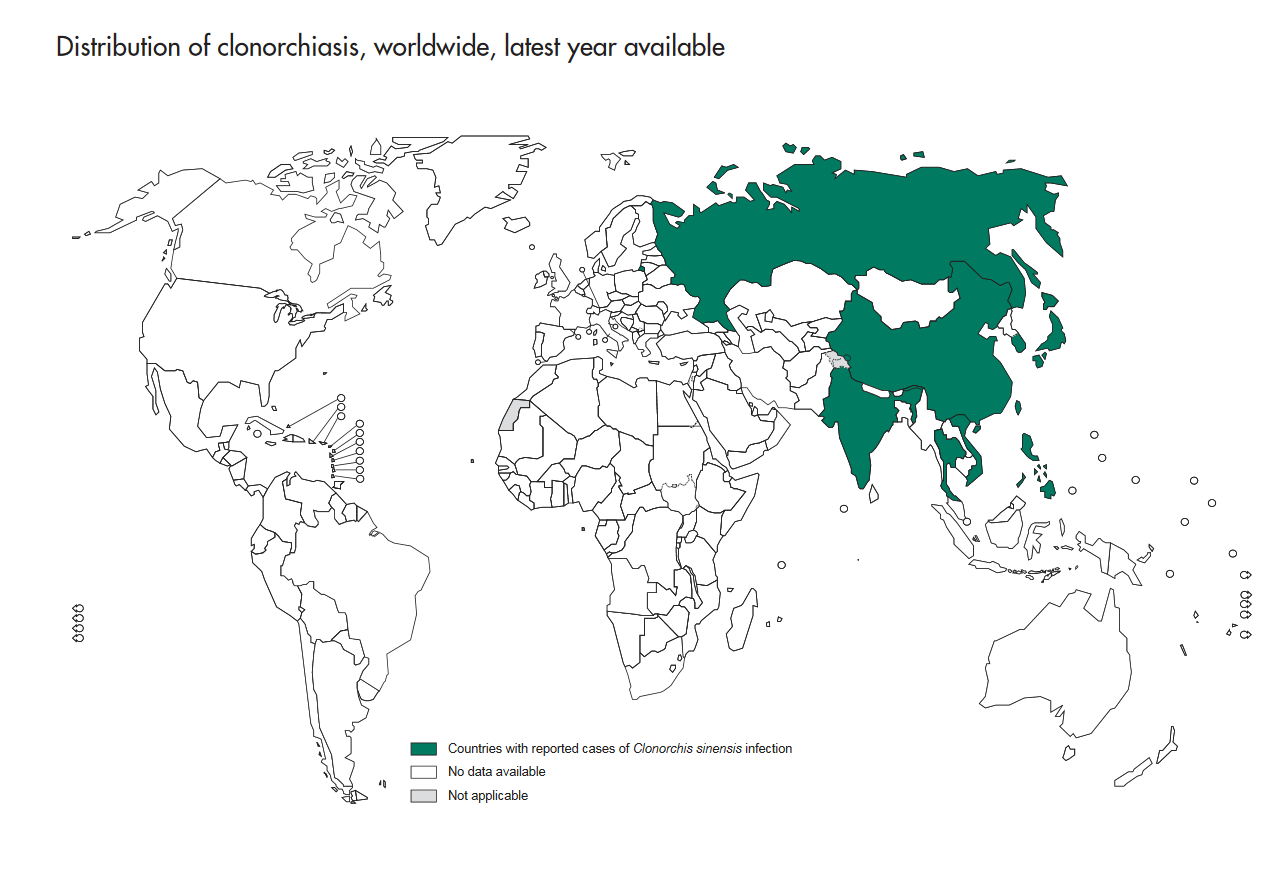
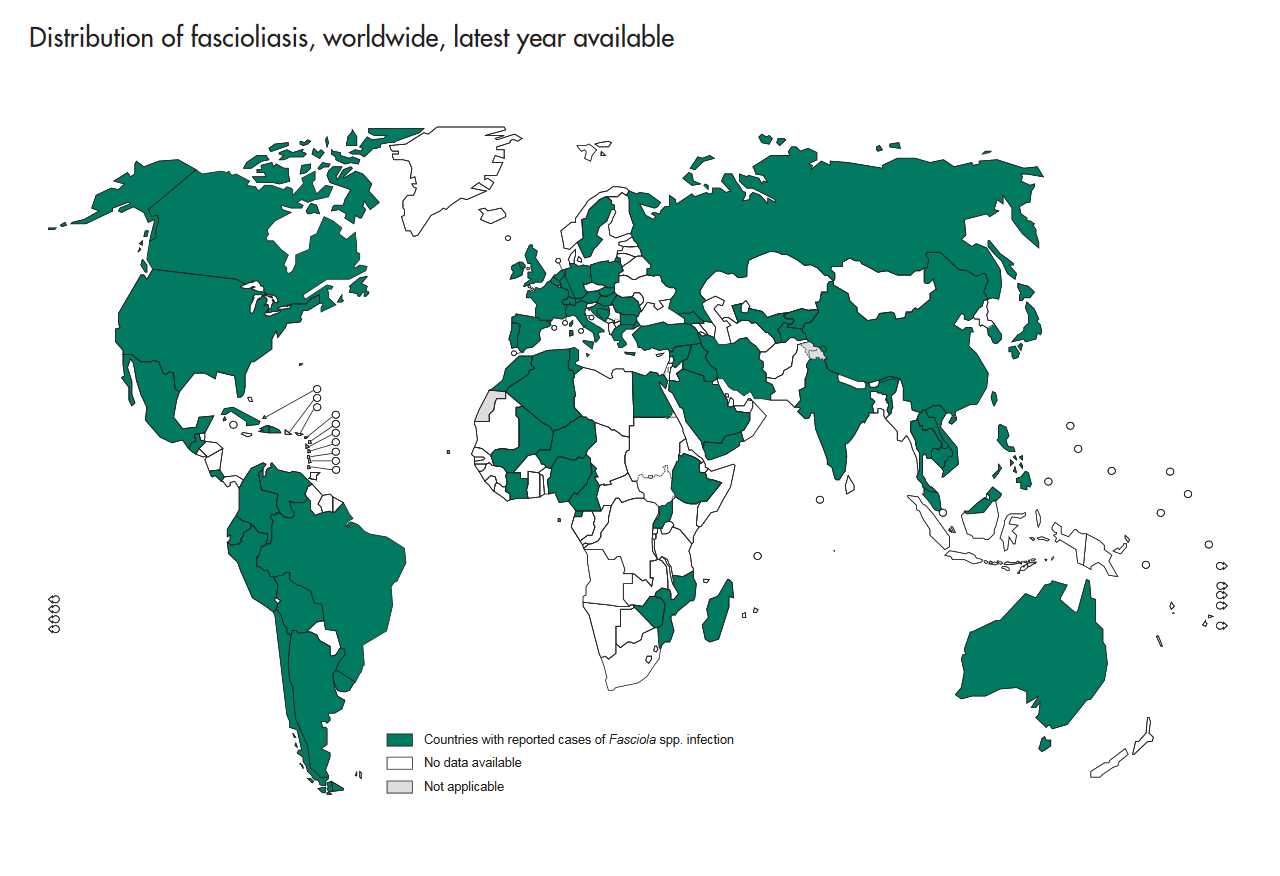
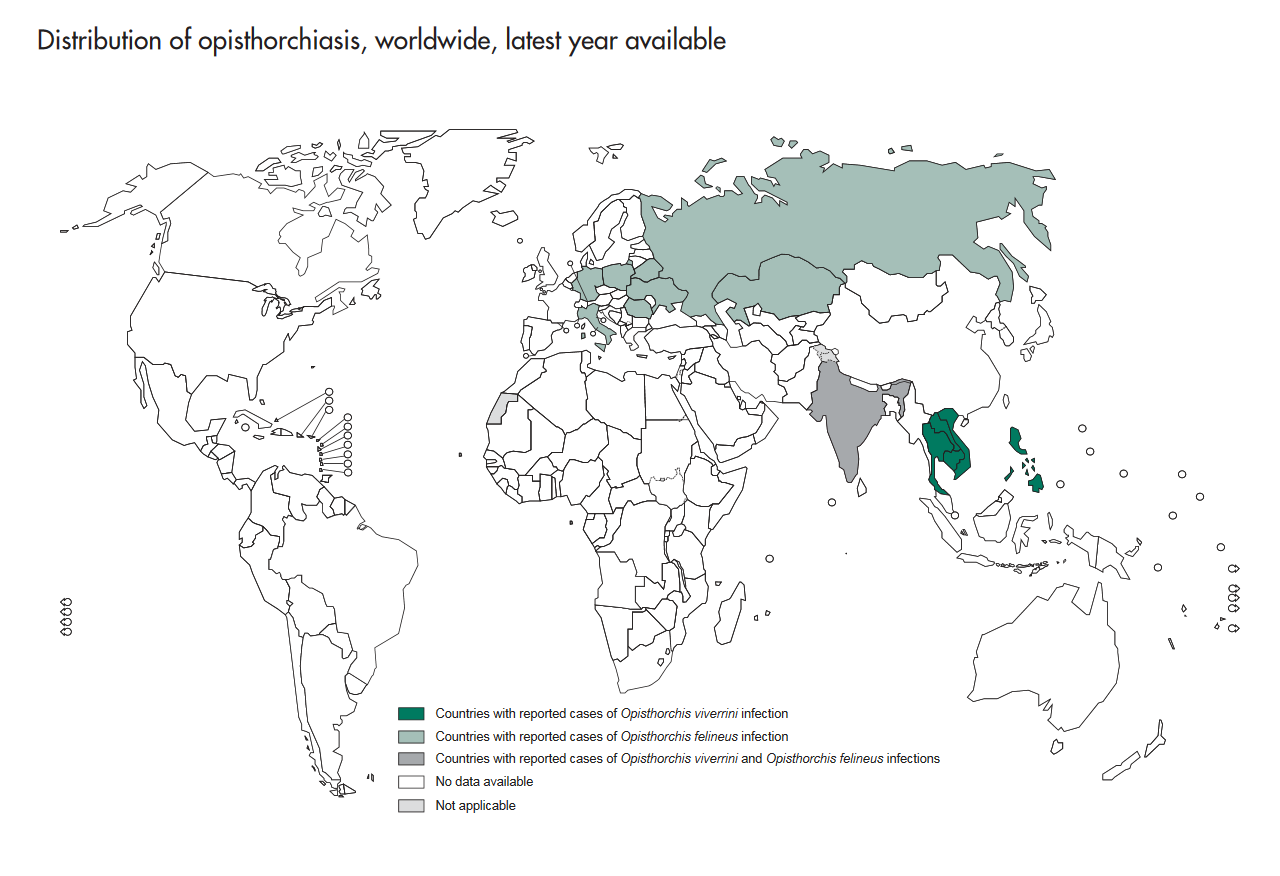
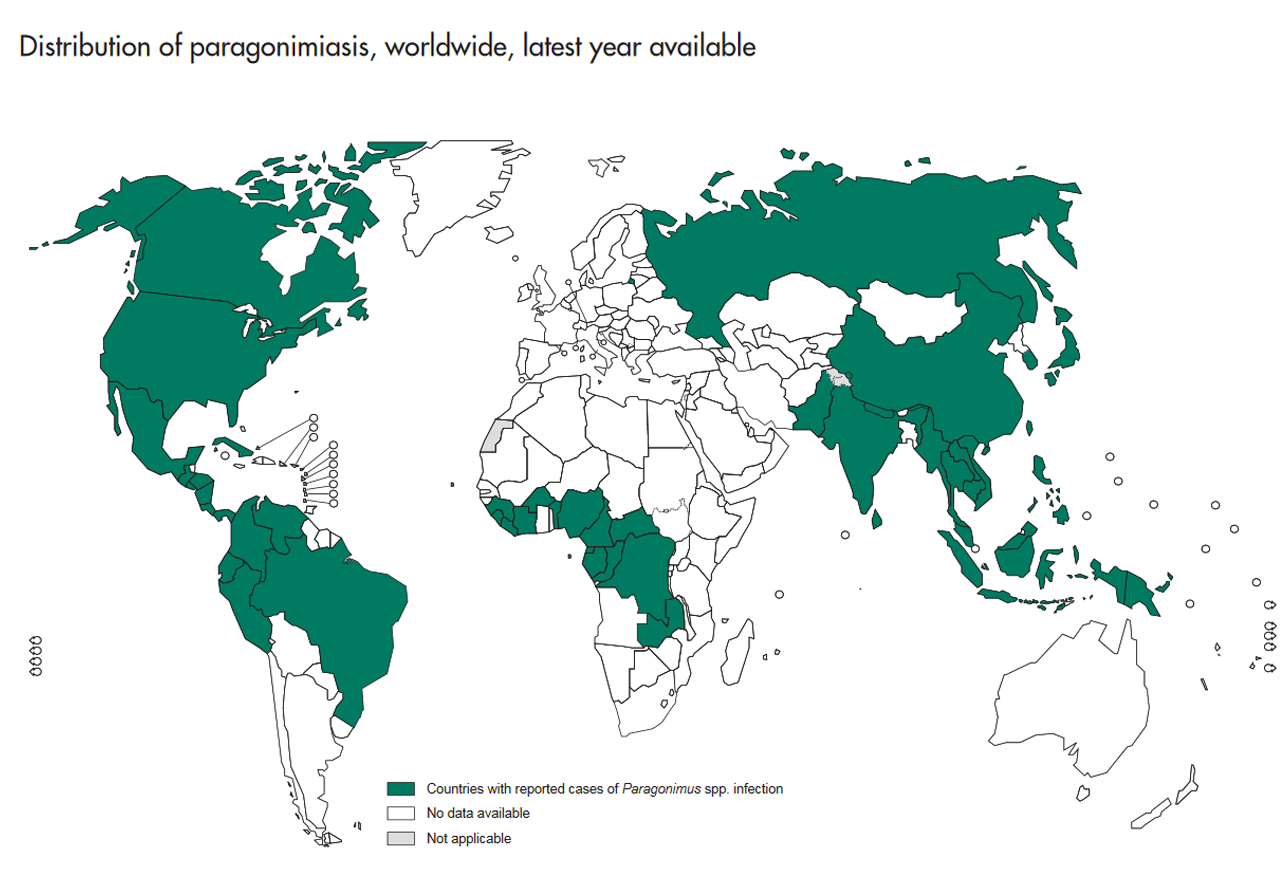
Clonorchiasis and opisthorchiasis are largely confined to Asia, while paragonimiasis occurs in parts of Africa, Asia and Latin America. Fascioliasis is a global disease affecting animals in many countries, but it constitutes a public health problem only in settings where specific social, economic and environmental conditions favour transmission to humans.
The public health burden due to foodborne trematodiases is predominantly due to morbidity rather than mortality with early and light infections often going unnoticed. Chronic infections are associated with severe morbidity with symptoms reflecting the organ in which the adult parasites are located in.
The adult parasites of Clonorchis sinensis and Opisthorchis spp. lodge in the smaller bile ducts of the liver, resulting in inflammation and fibrosis of surrounding tissues. Acute or early infection may result in non-specific gastrointestinal symptoms. Chronic infection can result in cholangiocarcinoma, a severe and often fatal bile duct cancer. Both C. sinensis and O. viverrini are classified as carcinogens.
Fasciola adult worms lodge in larger bile ducts and gall bladder resulting in inflammation, fibrosis, blockage, colic pain and jaundice. Chronic infection can result in liver cirrhosis.
The final location of Paragonimus spp. is the lungs, resulting in a chronic cough, blood-stained sputum, chest pain, dyspnoea (shortness of breath) and fever. These symptoms can be confounded with tuberculosis. Adult worms may also infect extra-pulmonary locations such as the brain and can result in symptoms of headaches, mental confusion, convulsions and cerebral haemorrhage.
Treatment of foodborne trematodiases is important to prevent progression of clinical disease and reduce associated morbidity. Treatment can be offered through preventive chemotherapy or individual case management.
Preventive chemotherapy involves a population-based approach where everyone in a given region or area is given medicines, irrespective of their infection status. This is recommended in areas where large numbers of people are infected. Praziquantel is recommended for treatment of clonorchiasis and opisthorchiasis while triclabendazole is recommended for fascioliasis. Both praziquantel and triclabendazole can be used for treatment of paragonimiasis.
Individual case-management involves the treatment of people with confirmed or suspected infection. This approach is more appropriate where cases are less clustered and where health facilities are available.
Treatment should be complemented by interventions that reduce transmission such as education on safe food practices, improved sanitation and veterinary public health measures.